Get Ready for the Course
// PRE-COURSE SETUP · 课前准备
- Create a free GitHub account at github.com
- Apply for the GitHub Education Pack at education.github.com/pack — use your @shanghaitech.edu.cn email. Approval takes 1–3 days and gives you Copilot for free.
- Install GitHub Copilot as a VS Code extension (step 5 — set up VS Code first if needed)
- Create a free account at openrouter.ai
- Go to Settings → API Keys and create a key — save it somewhere safe
- Add $5–10 of credit under Settings → Credits — this will last the entire course
- Download and install Blender from blender.org/download — get the latest stable release
- Optional head start: watch the first 2 episodes of the Blender Guru donut tutorial — it covers the core interface in ~30 minutes
- Sign up at claude.ai — use any email
- Subscribe to Claude Pro ($20/month) — check if your institution has a discount or arrangement
- Install Claude Code in your terminal:
npm install -g @anthropic-ai/claude-code
- Download and install VS Code from code.visualstudio.com
- Open VS Code → Extensions (⌘⇧X) → search PlatformIO IDE → Install
- PlatformIO will install ESP-IDF automatically when you first open an ESP32 project
- While you're in Extensions, also install GitHub Copilot (from step 1)
All five tools installed? Let Claude Code write your first firmware. Here’s how:
1. Create a PlatformIO project in VS Code
Open VS Code → PlatformIO icon → New Project → Board: Espressif ESP32 Dev Module → Framework: Arduino → Finish.
2. Open Claude Code in the project folder
cd your-project-folder
claude
3. Tell Claude Code what you want
Write an Arduino sketch for ESP32 that blinks the built-in LED on pin 2
every 500ms. Put it in src/main.cpp. Then tell me the PlatformIO command
to build and upload it.
Claude Code writes the code, places it in the right file, and gives you the exact command to flash it. If something fails, paste the error back and ask it to fix it — that loop is the core skill you’ll use all course.
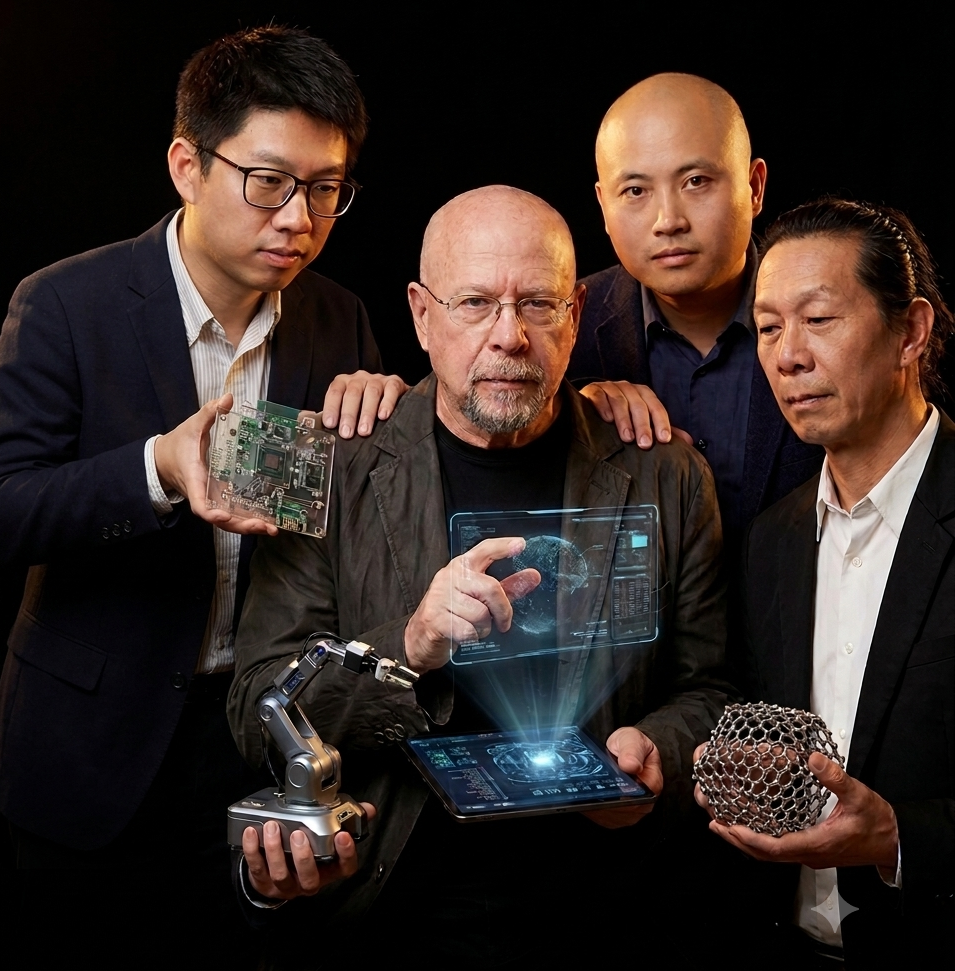
Don't panic. We're all figuring this out.
Some of these tools didn't exist two years ago. One or two will probably change before the course starts. The documentation will have gaps. The AI will occasionally hallucinate something spectacular. This is not a sign you're doing it wrong — it's a sign you're at the frontier.
Your instructors are learning too — we just have a head start of a few months. The best thing you can do is show up curious, set up the tools above, and be ready to break things on Day 1.
Get ready to break things on Day 1.